Showing posts with label Cairo. Show all posts

Monday, November 19, 2012

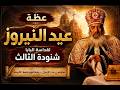
Egypt's New Coptic Pope Enthroned


Egypt's new Coptic pope enthroned 

November 19, 2012 
Christophe De Roquefeuil 

   
CAIRO: Pope Tawadros II has been enthroned as the new leader of Egypt's Coptic Christian minority in a ceremony at Cairo's St Mark's Cathedral attended by Prime Minister Hisham Qandil. 

Dozens of Coptic clerics in flowing robes took part in Sunday's ceremony, the first in four decades, as the Muslim Prime Minister looked on. 

Tawadros received the crown and crucifix from Bishop Pachomius, who had served as the church's interim leader, before ascending St Mark's huge wooden throne embossed with lions

Arabic, English and Greek mingled with the ancient Coptic language of the church's liturgy in the psalms and prayers of the service and the tributes of well-wishers. 

Tawadros, 60, was chosen on November 4 to succeed Pope Shenuda III, who died in March after four decades on the patriarchal throne. He was chosen after a blindfolded altar boy picked his name from a chalice, according to church custom. 

He becomes spiritual head of the largest Christian minority in the Middle East and 118th pope in a line dating back to the origins of Christianity and to Saint Mark, the apostle and author of one of the four Gospels, who brought the new faith to Egypt. 

Shenuda, a careful, pragmatic leader, died at a critical time for the increasingly beleaguered minority, which has faced a surge in sectarian attacks after an uprising overthrew president Hosni Mubarak in February last year. 

The pope leads the Coptic Orthodox community in a country where Christians make up between 6 and 10 per cent of an 83 million population. 

Amid increased fears about the community's future after the overthrow of Mubarak, Tawadros will be its main contact with Islamist President Mohamed Morsi. 

The rise of Islamists after the revolution sparked fears among Copts of further persecution, despite Morsi's repeated promises to be a president "for all Egyptians". 

Copts have suffered sectarian attacks for years, but since Mubarak's overthrow several dozen have been killed in sectarian clashes and during a protest in October last year crushed by the then ruling military.


Share

Monday, March 26, 2012

Egypt: Pope Offers Condolences to Coptic Orthodox

Catholic Information Service for Africa
(Nairobi)
20 MARCH 2012
Pope Shenouda III, Patriarch and head of the Coptic Orthodox Church in Egypt, 1923-2012


Vatican City — Praising the ecumenical commitment of the late Coptic Orthodox Pope Shenouda III of Alexandria, Pope Benedict XVI offered his condolences to Orthodox Christians in Egypt on the death of their patriarch.

Pope Shenouda, who served as patriarch of the Coptic Orthodox Church for 41 years, died March 17 at the age of 88.

In a message released at the Vatican the next day, Pope Benedict said he wanted to express his condolences and "brotherly compassion" to the bishops, priests and faithful of the Coptic Orthodox Church, which includes about 10 percent of Egypt's population of 82 million people.

The vast majority of Christians in Egypt belong to Pope Shenouda's church and his four decades as patriarch often involved standing up for the rights of the country's Christian minority and working with the Muslim majority to promote human rights and the common good.

"The Catholic Church as a whole shares the grief that afflicts the Orthodox Copts," Pope Benedict said, and Catholics pray that "the God of all mercy may receive Pope Shenouda in his joy, his peace and light."

Maronite Catholic Patriarch Bechara Rai, who traveled from Lebanon to Egypt March 17 as part of a pastoral visit to Egypt's 4,000 Maronite Catholics, had been scheduled to meet with Pope Shenouda at 4 p.m. that day.

"We were told in the morning that the meeting would not be possible because the pope's health had deteriorated badly," Archbishop Paul Sayah, vicar general of the Maronite Patriarchate in Lebanon, told CNS by email March 18.

The patriarch had advanced the date of his visit to Egypt, Archbishop Sayah said, "because we knew of the state of (Pope Shenouda's) health."


http://allafrica.com/stories/201203220204.html


Share

Sunday, March 25, 2012

Thousands of Copts crush into cathedral after pope's death

Egyptian Christian Copts mourn the death of Pope Shenuda III   


Thousands of Copts crush into cathedral after pope's death
The bells tolled on Saturday as tearful Christians crushed past the Cairo cathedral's gate hours...


The bells tolled on Saturday as tearful Christians crushed past the Cairo cathedral's gate hours after Pope Shenuda III's death, to get a glimpse of the man they called "father" in an uncertain time for the Egyptian minority.

Within an hour of the announcement of his death, traffic was jammed for kilometres leading to the St Mark's Cathedral, where the spiritual leader of the region's largest Christian minority was based.

The Copts, increasingly tight-knit in the face of assertive Islamists, displayed the crosses many have had tattooed on their wrists to get inside the church grounds and to the steps of Shenuda's offices, where they were told the pope's body lay waiting for the funeral.


"We love you, Father," they chanted, hoping for a final glimpse of the pontiff who led their community since 1971.


"The pope is wise, he was the father every young man, woman, widows and the orphaned," said Emil Essam, 28, his eyes red from sobbing.


"We have had many crises, and he gave us wisdom throughout all of them. He prayed for us throughout our oppression," he said, turning his back to Shenuda's offices to face east to pray.


The men and women chanted a mournful hymn in the ancient Coptic language and Arabic.
"They're saying: 'God please save us, oh Jesus," said Isaac Zakaria, an 18-year-old university student.


"He was like my father. He was wise, and very open-minded. There will be no one like him in the future," he said.

Outside, policemen stood guard with sniffer dogs to detect explosives, a reminder of the dangers faced by the ever more beleaguered Christians in the Muslim majority country.


Shenuda had come under unprecedented criticism by his flock after a suicide bombing killed more than 20 churchgoers in January 2011, weeks before a popular uprising ousted president Hosni Mubarak.

He risked some of his credibility by supporting the increasingly unpopular dictator, and with his calls to turn the other cheek despite increasing sectarian attacks.

Years earlier, the pope had been placed under house arrest by Mubarak's predecessor Anwar Sadat, who Shenuda denounced for courting Islamists.

But Mubarak, the Coptic Church believed, acted as a bulwark against the fundamentalists who questioned the Christians' equality in Egypt.

Misgivings about Shenuda's positions were overshadowed by a series of deadly blows against the Christians after the uprising that overthrew Mubarak.

Those attacks culminated in a bloody clash in October with soldiers that left at least 20 Coptic protesters dead. They had been protesting against an earlier attack on a church in southern Egypt.

On Saturday, the mourners said Shenuda had helped unite the country.
"He was a patriot, first and foremost," said Osama Gamal.


Share

Monday, March 19, 2012

Update:More Snaps From Cairo as hundred thousands pay their last respect to Papa Shenouda


18/3/2012
Egyptian Christians gather to mourn the death of Pope Shenouda III, the head of Egypt’s Coptic Orthodox Church, outside the Abassiya Cathedra in Cairo March 18, 2012. Christians gathered on Sunday to pay final respects to Pope Shenouda III, who sought to soothe sectarian tension in his four decades atop Egypt’s Orthodox Church but saw increasing flareups in the majority Muslim nation in the last months of his life.


http://theorthodoxchurch.info/blog/news/2012/03/updatemore-snaps-from-cairo-as-hundred-thousands-pay-their-last-respect-to-papa-shenouda/


Share

Friday, October 14, 2011

Christians Copts Genocide by Egyptian Army


English Report:Christians Copts Genocide by Muslim Egyptian Army,Run over them with Army tanks.Sunday 9/10/2011

Marshal Tantawi orders the Egyptian army to runs over Christians in Maspero demonstrators with tanks and killed 39 Christian Copts - Martyred
Cairo-Egypt.
9/10/2011
Bodies of Christian martyrs cut to pieces in the streets and on bridges in pools of blood.
"Mass murder and genocide of Christians in Egypt (genocide)"


Share

Thursday, October 13, 2011

CNN - Egyptian Army Attack Pro-Christians Protesters in Maspiro


Maspero - Sunday 9 October 2011


CNN - Egyptian Army Attack Coptic Protesters in Maspiro Oct. 10th 2011


Share

Sectarian tensions on rise in Egypt Breaking News CNN


Sectarian tensions on rise in Egypt Breaking News CNN


Share

Australian Parliament calls for an end to Coptic persecution in Egypt


ACM STATEMENT – 13 OCTOBER 2011


Australian Parliament calls for an end to Coptic persecution in Egypt


Today, the House of Representatives honored Australia’s commitment to religious freedom with a clear endorsement of a historic private member’s bill addressing the ongoing persecution of the Coptic Christians of Egypt.

On 19 September, Mr Craig Kelly MP, Liberal Federal Member for Hughes moved the following:

That this House:

(1) recognises that Coptic Christians in Egypt are suffering ongoing and increasing persecution;

(2) condemns the recent attacks on Coptic Christians in Egypt;

(3) expresses its sympathy for Coptic Christians who have been victims of recent attacks in Egypt; and

(4) calls on the Government to:

(a) issue a public statement condemning the ongoing attacks against the Coptic Christian minority in Egypt;

(b) make immediate representations to the United Nations to end the persecution of Coptic Christians in Egypt; and

(c) strongly urge the Egyptian Government to provide equal rights and protection for all Egyptian citizens regardless of race or religion.


Speaking to his private member’s bill, Mr Kelly noted that Egypt “is currently experiencing a period of unprecedented transition, the success of which hinges on full respect for the rule of law and compliance with international human rights standards including freedom of religion”.

At 10:00am today, Mr Kelly’s motion was passed by all members of the House.

With approximately 30 Coptic Christians observing proceedings from the Gallery, Mr Kelly acknowledged the presence of His Grace Bishop Suriel, Rev. Father Jonathan Ishak, Rev. Father Ghobrial Yassa and former Sutherland Shire Councillor Magdi Mikhail.


In his statement to the House, following the passing of his motion, Mr Kelly referred to the brutal military violence against Coptic Christian demonstrators on 9 October 2011, which left at least 24 dead and at least 270 injured. He stated the motion just passed could not have been more timely. He was right.

Mr Kelly urged members of the House to view videos demonstrating armoured military vehicles ploughing into unarmed Christian protestors, “although graphic and horrific.. to understand the gravity of the situation.”

In an emotional recount of a young Christian woman’s testimony, the House heard of how Miss Vivian Magi, tried to protect her dead fiancé’s body from soldiers after he was run-over an armoured vehicle. She told Egyptian TV:

“His body was in the middle of the wheels. His legs were torn. His head hit the pavement, breaking his skull. Soldiers gathered around us and started to beat him up. I begged them to leave him.. Then a soldier with a red cap came, shouting, cursing and hitting me with a stick then tried to beat him up. I threw my body on him (her fiance) … and the soldier said to me: ‘You infidel, why are you here?’”

Mr Kelly condemned the violence of the military, the very body that was meant to be protecting its civilians. He said that on that fateful day, the army had committed “mass murder” in Cairo. He also referred to the role that Egyptian State television played by instigating the violence, calling on so-called “honest Egyptians” to rush to the defence of the military who were under the attack of Coptic protestors, when in reality, it was the Copts who were being gunned down and beaten.

He spoke to the role of the international community, stating:

“Now is not the time for silence or appeasement from the international community, for as the Copts go so may go the entire Middle East. If a Christian minority cannot live in a country with a Muslim majority population without suffering persecution and institutionalised discrimination our future looks bleak.

…The moderate voices in Egypt must be put on notice in the strongest terms to root out any anti-Christian element in the army and to give equal rights to all Coptic Christians and to ensure their protection.”

The Australian Coptic Movement (ACM) thanks Mr Kelly for voicing the concerns of Australian Coptic Christians and for bringing the plight of the persecuted Christian minority of Egypt to the attention of the Australian Government. After attending a protest held by the ACM earlier this year, Mr Kelly did more than appreciate the extent of ongoing persecution that the Coptic Christians have suffered for decades. He did more than just offer words of sympathy. It is because of his tireless efforts that the result of today’s vote in that Chamber went the way it did.

The ACM also thanks each member of the House of Representatives today for doing the right thing by passing the motion.

The House of Representative’s endorsement of Mr Kelly’s motion sends a clear message to the Egyptian caretaker Government and indeed the world, that Australia does not and will not stand by in silence, whilst innocent Christians are being persecuted for their faith.

The Australian Coptic Movement
Sydney, Australia

Inquiries: aucopticmovement@gmail.com


http://www.auscma.com/
http://www.auscma.com/2011/10/13/australian-parliament-calls-for-an-end-to-coptic-persecution-in-egypt/

Share


Wednesday, October 12, 2011

Egypt's ruling military council denies killing Coptic Christians

Egypt ruling's military council, facing its worst crisis since the fall of ex-President Hosni Mubarak, was on Wednesday forced into an extraordinary denial of claims it was responsible for violence in which at least 25 people, mostly Coptic Christians, died at the weekend.

By Richard Spencer, Middle East Correspondent

4:42PM BST 12 Oct 2011

Under mounting pressure to explain the deaths of so many members of an often beleaguered minority, two generals spoke publicly to claim that the army was attacked by protesting Christians with swords and Molotov cocktails.

They denied numerous eye witness accounts and the testimony of hospitals that many of those who died were either shot by soldiers or run over by speeding army vehicles.

"This cannot be attributed to the armed forces, and this cannot be recorded in history, that the armed forces ran over people," said Gen. Adel Umara. He also denied that the soldiers had been issued with live bullets.

The violence broke out at the end of a march to Cairo's central television station by Christians protesting against attacks on churches by radical Islamists in the south of the country. But the fallout has given rise to claims that the army are deliberately inciting unrest to justify maintaining a grip on the country.

State television broadcast calls for Muslims to rally to the defence of the army, which it claimed was under attack from Christian mobs. But activists posted film online showing the army wading into apparently peaceful marchers.

Several videos showed armoured personnel carriers driving into the crowd at speed, and one showed a soldier firing into the crowd from the back of a van.

Some of the Christian activists involved also took part in the demonstrations which toppled Mr Mubarak in March, and have pointed to the similarity of the authorities' response. Like then, the army yesterday tried to blame the unrest on "third parties" – usually a reference to a foreign, particularly Israeli, conspiracy.

"The basic fact is there are enemies of the country who take advantage of the protests to infiltrate and realise destructive roles," the second general, Mahmoud Hegazi, said. "We should all be aware."

But the army council received a stern warning from the United States, which has provided extensive aid to the Egyptian military.

Hillary Clinton, the secretary of state, warned the government "to ensure that the fundamental rights of all Egyptians are respected, including the rights of religious freedom, peaceful assembly and the end of military trials for civilians, and that efforts be made to address sectarian tensions".


http://www.telegraph.co.uk/
http://www.telegraph.co.uk/news/worldnews/africaandindianocean/egypt/8822582/Egypts-ruling-military-council-denies-killing-Coptic-Christians.html


Share

Coptic Christians in Egypt battle state's version of deadly protest

Coptic Christians in Egypt, already dealing with a massacre, are now contending with the state-run version of events, which has convinced many Egyptians that Christians were at least partially responsible for the violence.

By Kristen Chick, Correspondent / October 11, 2011

Egypt’s muted response to a deadly attack by its own Army on a Christian protest Sunday is furthering the anger of Christians, and threatening to escalate sectarian strife at a delicate time of transition.

Government officials have portrayed Sunday’s events as a clash with violent protesters provoked by “hidden hands” to “meddle with the country’s security and safety.” Protesters say their demonstration – protesting a recent attack on a church in southern Egypt as well as the Army’s dispersal of a protest the week before – was peaceful when it was attacked. At least 17 Christians died; most had gunshot wounds and signs of being crushed by vehicles.

While many Muslims joined Christians in mourning the victims Tuesday, others are still convinced that the Christians were the aggressors. Boula Zakie, who was hit by an Army vehicle during the attack, said he has received dozens of phone calls from Muslim friends asking why Christians attacked the Army.

“They don’t believe us,” he says. One of his friends was killed in the attack and another is in critical condition.
Christian anger

Egypt’s finance and deputy prime minister, Hazem al-Beblawi, tendered his resignation Tuesday over the Army attack on Sunday, but reports in state media said that it was rejected by Field Marshal Mohamed Hussein Tantawi, Egypt's military ruler. Mr. Beblawi could not be reached for comment.

The cabinet also promised to implement within two weeks a law that would ease building restrictions on churches, an area where Christians have long been discriminated against. But coming after witnesses said the Army opened fire and drove vehicles into a crowd of protesters, such measures are being rejected by many Christians. Few believe that a fact-finding committee ordered by the military will hold responsible those who killed the protesters.

“This is ridiculous. We have been talking about this law for so long, and only now they remember it?” says Karima Kamal, a columnist and author who writes on Coptic affairs. The entire government should resign, she says, and its refusal to acknowledge what happened will only spur more sectarian attacks. “This is not a response for a state or a government. It is as if nothing happened.”
Public anger

Thousands of Copts and Muslims directed intense anger at the military after the funeral of some of the victims Monday, chanting angrily for the removal of Field Marshal Tantawi. Some political parties have also blasted Egypt’s military council, which is ruling Egypt during the transition from the rule of former President Hosni Mubarak.

Political figure Ayman Nour said at a press conference Monday that, “There is no partnership between us and the council now that the blood of our brothers stands between us.'' The Free Egyptians party, co-founded by Christian businessman Naguib Sawiris, issued a statement warning the military council that "continuing to handle events with force will shake the trust that Egyptians have given it.”

Yet it is unclear how far the outrage over the attack extends. The Muslim Brotherhood released a statement criticizing Christians for holding a protest, saying the time was not right. Many Egyptians saw an entirely different version of events on state television, which broadcast incendiary reports that armed Christians had attacked the Army, and said Army soldiers had died. (No names or evidence of deaths among soldiers has yet been presented to the public.)

The state television reports spurred hundreds of Muslims to take to the streets, armed with sticks, to defend the Army against what they thought were armed and violent Christians.


http://www.csmonitor.com/
http://www.csmonitor.com/World/Middle-East/2011/1011/Coptic-Christians-in-Egypt-battle-state-s-version-of-deadly-protest


Share

Tuesday, October 11, 2011

Coptic Massacre


Egyptian Army Massacres Tens of Copts During Peaceful Protest Sunday 9 October, 2011.
His Grace Bishop Suriel, with the presence of the Clergy of Melbourne, held a Press Conference regarding the barbaric attacks against our Coptic Christian people in Egypt.


Share

The Coptic Orthodox Holy Synod Statement


The Coptic Orthodox Holy Synod Statement towards Maspiro's clashes between the Egyptian Army forces and Copts - 10 October 2011


The Holy Synod of the Coptic Orthodox Church under the leadership of Pope Shenouda III met with seventy in attendance on Monday October 10, 2011 in the Papal residence in Cairo, Egypt to discuss the events of the prior day in front of Maspiro where at least 24 of our beloved children have been killed and at least 200 have been injured. We ascertain that our Christian faith doesn't allow us to use violence of any kind. But we also know that strangers implanted themselves among our children and committed acts that are more suited to their morals. Coptic Christians feel that their problems are always being repeated without accountability and without the due justice of the law. The Holy Synod invites all Coptic Christians to fast and pray for three days beginning Tuesday October 12, 2011 that God may bring his peace to our beloved country of Egypt.


Share

Monday, October 10, 2011

Egyptian cabinet to meet over violence that kills 24

By Dina Zayed and Edmund Blair

CAIRO | Sun Oct 9, 2011 8:28pm EDT

(Reuters) - Christians clashed with military police, leaving at least 24 people dead in Cairo, and the cabinet called an emergency meeting for Monday, vowing the violence would not derail Egypt's first election since Hosni Mubarak was toppled.

Christians protesting about an attack on a church set cars on fire, burned army vehicles and hurled rocks at military police who they said used heavy-handed tactics against them. It was some of the worst violence since the February uprising.

The violence casts a shadow over the imminent parliamentary election. Voting starts on November 28 with candidates due to begin registering during the week starting Wednesday.

The clashes also added to growing frustration among activists with the army who many Egyptians suspect wants to keep hold of the reins of power from behind the scenes even as it hands over day-to-day government. The army denies this.

"This is a dark day in the military's history. This is betrayal, a conspiracy, murder," Magdy el-Serafy wrote on Twitter where he and other Egyptians voiced frustration at the army's handling of the protest.


The Health Ministry said the death toll had reached 24 with 213 injured, the official MENA news agency reported. It did not identify the dead but state television had earlier reported three soldiers were killed.

Prime Minister Essam Sharaf toured the area near the state television building where clashes erupted, MENA said, adding he spoke to those in the area to hear their accounts of events.

"What happened in front of the state TV building is exactly what happened on January 25," wrote Muslim activist Asmaa Mahfouz, referring to the start of the anti-Mubarak uprising.

Christians, who make up 10 percent of Egypt's roughly 80 million people, took to the streets after blaming Muslim radicals for partially demolishing a church in Aswan province last week. They also demanded the sacking of the province's governor for failing to protect the building.

 Tensions between Christians and Muslims have increased since the uprising. But Muslim and Christian activists said the violence Sunday was not due to sectarian differences but was directed at the army's handling of the protest.

'MALICIOUS CONSPIRACIES'

"Instead of advancing to build a modern state of democratic principles, we are back searching for security and stability, worrying that there are hidden hands, both domestic and foreign, seeking to obstruct the will of Egyptians in establishing a democracy," Sharaf said on state television.

"We will not surrender to these malicious conspiracies and we will not accept reverting back," he said in his address.

The cabinet said in a statement that it would "not let any group manipulate the issue of national unity in Egypt or delay the process of democratic transformation" which it said would begin with opening the doors to candidate nominations.

 Cabinet spokesman Mohamed Hegazy told Reuters the cabinet would hold a special session Monday to discuss the events.

"The most important thing is to contain the situation, see the way forward and the necessary measures to avoid any ramifications," Hegazy said, adding a committee of prominent figures from the church and Al-Azhar mosque would also meet.

Presidential candidate Amr Moussa and political groups said they would hold an emergency meeting Monday about the violence.

The army imposed a curfew on Cairo's Tahrir Square, the focus for protests that brought down Mubarak, and the downtown area. It was set from 2 a.m. to 7 a.m., (0000-0500 GMT).

Pictures of smashed faces and dead bodies of what activists said were bodies run over by military vehicles circulated online, with angry comments comparing the violence used by the military to that of Mubarak's hated police in the uprising.

 "What happened today is unprecedented in Egypt. 17 corpses crushed by military tanks," Hossam Bahgat, human rights activist tweeted from hospital. "I saw bodies missing hands and legs, heads twisted away or plastered to the ground."

Protesters also took to the streets in Alexandria, Egypt's second city.

The government appealed for calm. In comments published on his Facebook page, Sharaf said he had contacted security and church authorities about the situation, saying the one ones to benefit were the "enemies of the January revolution."

(Writing by Edmund Blair; Editing by Michael Roddy)


http://www.reuters.com/
http://www.reuters.com/article/2011/10/10/us-egypt-copts-clashes-idUSTRE7981Q220111010
Share

Friday, October 15, 2010

FIRST DAY OF THE DELIBERATIONS OF THE HOLY SYNOD OF THE PATRIARCHATE OF ALEXANDRIA

Today, 7th October 2010, the Holy Synod gathered for the appointed Meeting of the Holy Synod of the Patriarchate of Alexandria, under the Presidency of His Beatitude Theodoros II, Pope and Patriarch of Alexandria and All Africa in the Conference Hall of the Hoy Synod.

Before the Meeting, a Divine Liturgy was held in the Holy Patriarchal Chapel of Ss Theodoroi. At around 09h30 the Synodal deliberations began. The opening was declared by His Beatitude as he addressed the Members of the Synod.

His Eminence Elder Metropolitan Paul of Memphis, first in the order of the Hierarchs of the Holy Synod, replied on behalf of the Metropolitans and Bishops to His Beatitude, to whom he addresses wholehearted congratulations on his multifaceted and tireless Hierarchal work. His Beatitude, as a gift of respect and honour to the elder hierarch, gave him a silver emblem of the ancient Patriarchate, on hi ninetieth year.

His Beatitude then spoke at length to the Synod about the work undertaken during the past year in all fields of the ecclesiastical service of the Patriarchate (Conciliatory and Official visits to the Church of Albania, Greece, Cyprus, as well as Cappadocia, missionary and pastoral visits to the Holy Metropolises of Aksum, Khartoum, Johannesburg and Pilousion, ordinations of new hierarchs, receiving of heads of state at the patriarchal See, decoration of distinguished personalities, international conferences, administrative and service issues, renovation works with special mention of the creation of the Patriarchal Museum, the total renovation of the historical Holy Monastery of St George in Old Cairo, etc).

Also, expressing the gratification of the C hurch of the Apostle Mark on the completion of thirteen productive years as a hierarch, His Beatitude gave an honourary distinction of the Cross of the Order of St Savvas with a Star to His Eminence Metropolitan Alexandros of Nigeria and to His Eminence Sergios on the occasion of his name day, he gave a valuable historical icon of St Sergios of Radonezh.

He went on to announce the resignation given months previously of His Eminence Ignatios of Central Africa, the acceptance of His Grace Ignatios Bishop of Eleusina to the order of retired clergy of the Patriarchal Throne following his personal request for this, and the appointment of His Eminence Metropolitan Seraphim of Johannesburg and Pretoria as representing the Patriarchate of Alexandria on European Union Programmes.


The creation by Patriarchal Decree of the Holy Diocese of 1. Botswana, 2. Sierra Leone and 3. Brazzaville and Gabon followed.

The Holy Synod then immediately continued with the elections of Archimandrite Nikiphoros Mikragiannanitou to the Holy Metropolis of Central Africa, of Archimandrite Ioannis Tsaftarides to Provincial Bishop of Mozambique and of His Grace Gennadios to Provincial Bishop of Botswana, as well as the transfers of:

1. Metropolitan Seraphim from Johannesburg and Pretoria to Zimbabwe
2. Metropolitan Damaskinos from Accra to Johannesburg and Pretoria
3. Metropolitan George from Zimbabwe to Accra

Hierarchs of the Throne then read their reports of activities of the year 2009.

The deliberations of the Holy Synod of the Patriarchate of Alexandria will continue in the evening with the reading of more reports.

Biographies of the new Bishops

The elected Bishop of Mozambique, Archimandrite Ioannis (Tsaftarides) was born in Angeryko Zakynthos in 1969. Following his schooling on the island of his birth, he studied at the Ecclesiastical School of Athens, the Theology Faculty of the University of Athens and the Theology Faculty of the University of Sophia from where he graduated in 2001. He received a Master’s Degree in 2010 from the Department of Greek and Latin Studies of the University of Johannesburg and is preparing for a doctorate at the same University.

He was ordained Deacon on 21 November 1993 from the then Metropolitan Panteleimon of Zakynthos and on 17 December of the same year he was ordained Priest from the then Metropolitan of Dodonis (now Metropolitan of Zakynthos) Chrysostomos. He was consecrated as an Archimandrite in 1998 in Zambia by the late Pope and Patriarch Petros VII.

Since 1993 he has served as a missionary for the ancient Patriarchate, serving in churches in Zimbabwe, Zambia, Cairo and South Africa.

He has organized and participated in various conferences and has written various studies.

On October 7th, 2010, by proposal of His Beatitude Theodoros II, Pope and Patriarch of Alexandria and All Africa he was elected by the Holy Synod of the Patriarchate of Alexandria as Bishop of Mozambique.

The elected Metropolitan of Central Africa, Archimandrite Nikiphoros (Mikragiannanitis, known in the world as George Konstandinou) was born in Thessaloniki in 1949.

Following his graduation from the Praktiko High School of Thessaloniki he studied at the Ecclesiastical School of Thessaloniki (1967-1969). In 1975 he graduated from the Theological Faculty of the Aristoteleian University of Thessaloniki and in 1999 was declaredas a Doctor of the Theological Faculty of the University.

In 1971 he was tonsured a monk at the Holy Patriarchal and Stavropegiake Monastery of the Holy Trinity in Tsangarolo, Hania. On 22nd August of the same year he was ordained Deacon. In 1977 he entered the Agion Oros (Skete of St Anna) and appointed as a teacher at the Ecclesiastical Academy of Mount Athos. He then went on to become deputy Head and in 1988 following a proposal of the Holy Community of Mount Athos, he was appointed by the Ecumenical Patriarchate as Dean. In 1978 he was ordained to the Priesthood by His Grace Chrysostomos of Rodostolos and was later consecrated as an Archimandrite by His Eminence Nikodimos of Ierissos and Mount Athos.

In 1997 he resigned from the Athonite Academy and following an invitation from His Beatitude Archbishop Anastasios of Albania, he took over the organization of the first Ecclesiastical High School in Argyrokastro.

Since 2006 he has participated in the administration of the Orthodox University of the Congo “St Athanasios the Athonite”, where he lectures.

He has written many studies and has participated in many conferences in Greece and overseas.

On 7th October 2010, proposed by His Beatitude Theodoros II, Pope and Patriarch of Alexandria and All Africa, he was elected by the Holy Synod as Metropolitan of Central Africa.


http://www.patriarchateofalexandria.com/
http://www.patriarchateofalexandria.com/index.php?module=news&action=details&id=542&PHPSESSID=augmj1nmfqb4i8aq4rlg1s38q1


Share

Facebook Comments

My Blog List

Twitter